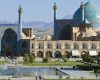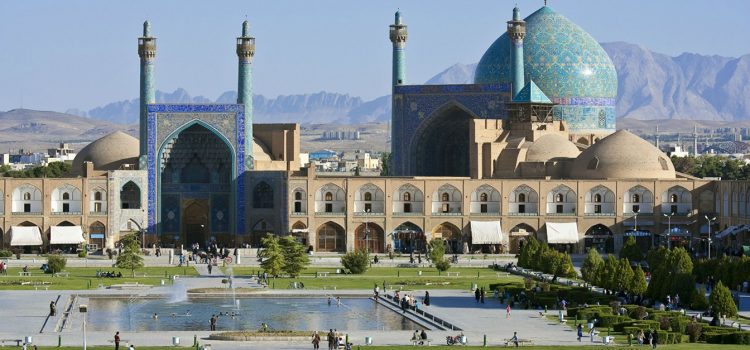
[:en]Built by Shah Abbas I the Great at the beginning of the 17th century, and bordered on all sides by monumental buildings linked by a series of two-storeyed arcades, the site is known for the Royal Mosque, the Mosque of Sheykh Lotfollah, the magnificent Portico of Qaysariyyeh and the 15th-century Timurid palace. They are an impressive testimony to the level of social and cultural life in Persia during the Safavid era.
Outstanding Universal Value
Brief Synthesis
The Meidan Emam is a public urban square in the centre of Esfahan, a city located on the main north-south and east-west routes crossing central Iran. It is one of the largest city squares in the world and an outstanding example of Iranian and Islamic architecture. Built by the Safavid shah Abbas I in the early 17th century, the square is bordered by two-storey arcades and anchored on each side by four magnificent buildings: to the east, the Sheikh Lotfallah Mosque; to the west, the pavilion of Ali Qapu; to the north, the portico of Qeyssariyeh; and to the south, the celebrated Royal Mosque. A homogenous urban ensemble built according to a unique, coherent, and harmonious plan, the Meidan Emam was the heart of the Safavid capital and is an exceptional urban realisation.
Also known as Naghsh-e Jahan (“Image of the World”), and formerly as Meidan-e Shah, Meidan Emam is not typical of urban ensembles in Iran, where cities are usually tightly laid out without sizeable open spaces. Esfahan’s public square, by contrast, is immense: 560 m long by 160 m wide, it covers almost 9 ha. All of the architectural elements that delineate the square, including its arcades of shops, are aesthetically remarkable, adorned with a profusion of enamelled ceramic tiles and paintings.
Of particular interest is the Royal Mosque (Masjed-e Shah), located on the south side of the square and angled to face Mecca. It remains the most celebrated example of the colourful architecture which reached its high point in Iran under the Safavid dynasty (1501-1722; 1729-1736). The pavilion of Ali Qapu on the west side forms the monumental entrance to the palatial zone and to the royal gardens which extend behind it. Its apartments, high portal, and covered terrace (tâlâr) are renowned. The portico of Qeyssariyeh on the north side leads to the 2-km-long Esfahan Bazaar, and the Sheikh Lotfallah Mosque on the east side, built as a private mosque for the royal court, is today considered one of the masterpieces of Safavid architecture.
The Meidan Emam was at the heart of the Safavid capital’s culture, economy, religion, social power, government, and politics. Its vast sandy esplanade was used for celebrations, promenades, and public executions, for playing polo and for assembling troops. The arcades on all sides of the square housed hundreds of shops; above the portico to the large Qeyssariyeh bazaar a balcony accommodated musicians giving public concerts; the tâlâr of Ali Qapu was connected from behind to the throne room, where the shah occasionally received ambassadors. In short, the royal square of Esfahan was the preeminent monument of Persian socio-cultural life during the Safavid dynasty.
Criterion (i): The Meidan Emam constitutes a homogenous urban ensemble, built over a short time span according to a unique, coherent, and harmonious plan. All the monuments facing the square are aesthetically remarkable. Of particular interest is the Royal Mosque, which is connected to the south side of the square by means of an immense, deep entrance portal with angled corners and topped with a half-dome, covered on its interior with enamelled faience mosaics. This portal, framed by two minarets, is extended to the south by a formal gateway hall (iwan) that leads at an angle to the courtyard, thereby connecting the mosque, which in keeping with tradition is oriented northeast/southwest (towards Mecca), to the square’s ensemble, which is oriented north/south. The Royal Mosque of Esfahan remains the most famous example of the colourful architecture which reached its high point in Iran under the Safavid dynasty. The pavilion of Ali Qapu forms the monumental entrance to the palatial zone and to the royal gardens which extend behind it. Its apartments, completely decorated with paintings and largely open to the outside, are renowned. On the square is its high portal (48 metres) flanked by several storeys of rooms and surmounted by a terrace (tâlâr) shaded by a practical roof resting on 18 thin wooden columns. All of the architectural elements of the Meidan Imam, including the arcades, are adorned with a profusion of enamelled ceramic tiles and with paintings, where floral ornamentation is dominant – flowering trees, vases, bouquets, etc. – without prejudice to the figurative compositions in the style of Riza-i Abbasi, who was head of the school of painting at Esfahan during the reign of Shah Abbas and was celebrated both inside and outside Persia.
Criterion (v): The royal square of Esfahan is an exceptional urban realisation in Iran, where cities are usually tightly laid out without open spaces, except for the courtyards of the caravanserais (roadside inns). This is an example of aform of urban architecture that is inherently vulnerable.
Criterion (vi): The Meidan Imam was the heart of the Safavid capital. Its vast sandy esplanade was used for promenades, for assembling troops, for playing polo, for celebrations, and for public executions. The arcades on all sides housed shops; above the portico to the large Qeyssariyeh bazaar a balcony accommodated musicians giving public concerts; the tâlâr of Ali Qapu was connected from behind to the throne room, where the shah occasionally received ambassadors. In short, the royal square of Esfahan was the preeminent monument of Persian socio-cultural life during the Safavid dynasty (1501-1722; 1729-1736).
Integrity
Within the boundaries of the property are located all the elements and components necessary to express the Outstanding Universal Value of the property, including, among others, the public urban square and the two-storey arcades that delineate it, the Sheikh Lotfallah Mosque, the pavilion of Ali Qapu, the portico of Qeyssariyeh, and the Royal Mosque.
Threats to the integrity of the property include economic development, which is giving rise to pressures to allow the construction of multi-storey commercial and parking buildings in the historic centre within the buffer zone; road widening schemes, which threaten the boundaries of the property; the increasing number of tourists; and fire.
Authenticity
The historical monuments at Meidan Emam, Esfahan, are authentic in terms of their forms and design, materials and substance, locations and setting, and spirit. The surface of the public urban square, once covered with sand, is now paved with stone. A pond was placed at the centre of the square, lawns were installed in the 1990s, and two entrances were added to the northeastern and western ranges of the square. These and future renovations, undertaken by Cultural Heritage experts, nonetheless employ domestic knowledge and technology in the direction of maintaining the authenticity of the property.
Management and Protection requirements
Meidan Emam, Esfahan, which is public property, was registered in the national list of Iranian monuments as item no. 102 on 5 January 1932, in accordance with the National Heritage Protection Law (1930, updated 1998) and theIranian Law on the Conservation of National Monuments (1982). Also registered individually are the Royal Mosque (Masjed-e Shah) (no. 107), Sheikh Lotfallah Mosque (no. 105), Ali Qapu pavilion (no. 104), and Qeyssariyeh portico (no. 103). The inscribed World Heritage property, which is owned by the Government of Iran, and its buffer zone are administered and supervised by the Iranian Cultural Heritage, Handicrafts and Tourism Organization (which is administered and funded by the Government of Iran), through its Esfahan office. The square enclosure belongs to the municipality; the bazaars around the square and the shops in the square’s environs are owned by the Endowments Office. There is a comprehensive municipal plan, but no Management Plan for the property. Financial resources (which are recognised as being inadequate) are provided through national, provincial, and municipal budgets and private individuals.
Sustaining the Outstanding Universal Value of the property over time will require developing, approving, and implementing a Management Plan for the property, in consultation with all stakeholders, that defines a strategic vision for the property and its buffer zone, considers infrastructure needs, and sets out a process to assess and control major development projects, with the objective of ensuring that the property does not suffer from adverse effects of development.[:de]Es wurde Anfang des 17. Jahrhunderts von Shah Abbas I. dem Großen erbaut .Es ist an allen Seiten von monumentalen Gebäuden, die durch eine Reihe von zweistöckigen Arkaden miteinander verbunden sind umgeben. Die Stätte umfasst die Königliche Moschee, die Moschee von Sheykh Lotfollah, der Prächtige Portikus von Qaysariyyeh und der Timurid Palast aus dem 15. Jahrhundert. Sie sind ein eindrucksvolles Zeugnis des sozialen und kulturellen Lebens in Persien während der Safawidenzeit.
Hervorragender universeller Wert
Kurze Zusammensetzung
Das Meidan Emam ist ein öffentlicher städtischer Platz im Zentrum von Isfahan, eine Stadt an den wichtigsten Nord-Süd- und Ost-West-Routen durch den zentralen Iran. Es ist einer der größten Stadtplätze der Welt und ein herausragendes Beispiel für iranische und islamische Architektur. Der Anfang des 17. Jahrhunderts vom Safawiden-Schah Abbas I. erbaute Platz wird von zweistöckigen Arkaden begrenzt und an jeder Seite von vier prächtigen Gebäuden umgeben. Im Osten befindet sich die Scheich-Lotfallah-Moschee, im Westen der Pavillon von Ali Qapu, im Norden der Portikus von Qeyssariyeh,und im Süden die berühmte Königliche Moschee. Ein homogenes städtisches Ensemble, das nach einem einzigartigen, zusammenhängenden und harmonischen Plan erbaut wurde. Das Meidan Emam war das Herz der Safawiden-Hauptstadt und eine außergewöhnliche städtebauliche Zusammensetzung.
Auch bekannt als Naghsh-e Jahan (“Bild der Welt”), oder früher als Meidan-e Shah, ist Meidan Emam nicht typisch für städtische Ensembles im Iran, wo Städte normalerweise ohne große offene Räume eng aneinander liegen. Der öffentliche Platz von Isfahan ist dagegen immens: 560 m lang und 160 m breit, er umfasst fast 9 ha. Alle architektonischen Elemente, die den Platz beschreiben, einschließlich der Arkaden von Geschäften sind mit einer Fülle von emaillierten Keramikfliesen und Gemälden ästhetisch bemerkenswert geschmückt.Von besonderem Interesse ist die Königliche Moschee (Masjed-e Shah), die sich auf der Südseite des Platzes befindet und nach Mekka ausgerichtet ist. Es ist das berühmteste Beispiel der farbenfrohen Architektur, die im Iran unter der Safawiden-Dynastie (1501-1722; 1729-1736) ihren Höhepunkt erreichte. Der Pavillon von Ali Qapu an der Westseite bildet den monumentalen Eingang zur palastartigen Zone und zu den dahinter liegenden königlichen Gärten. Seine Wohnungen, hohes Portal und überdachte Terrasse (Tâlâr) sind bekannt. Der Portikus von Qeyssariyeh an der Nordseite führt zum 2 km langen Isfahan Basar und die Sheikh Lotfallah Moschee, die als private Moschee für den Königshof erbaut wurde.Sie gilt heute als eines der Meisterwerke der Safawiden-Architektur.
Das Meidan Emam war das Herzstück der Kultur, Wirtschaft, Religion, sozialen Macht, Regierung und Politik der Safawiden. Seine ausgedehnte sandige Esplanade wurde für Feiern, Promenaden und öffentliche Hinrichtungen, das Spielen von Polo und für das Zusammenstellen von Truppen genutzt. Die Arkaden auf allen Seiten des Platzes beherbergten Hunderte von Geschäften.
Kriterium (i): Das Meidan Emam stellt ein homogenes städtisches Ensemble, das über einen kurzen Zeitraum nach einem einzigartigen, zusammenhängenden und harmonischen Plan aufgebaut wurde ,dar. Alle dem Platz zugewandten Denkmäler sind ästhetisch bemerkenswert. Von besonderem Interesse ist die Königliche Moschee, die mit der Südseite des Platzes durch ein riesiges, tiefes Eingangsportal mit abgewinkelten Ecken verbunden ist.Sie ist mit einer Halbkuppel gekrönt, und innen ist mit emaillierten Fayence-Mosaiken bedeckt. Dieses von zwei Minaretten umrahmte Portal wird im Süden von einer formalen Torhalle (Iwan), die schräg zum Hof führt, erweitert und dadurch die Moschee verbindet, und traditionsgemäß nach Nordost / Südwest (Richtung Mekka) ausgerichtet ist. Die Königliche Moschee von Isfahan bleibt das berühmteste Beispiel der farbenfrohen Architektur, die ihren Höhepunkt im Iran unter der Safawiden-Dynastie erreichte.Seine vollständig mit Malereien geschmückten und nach außen weitgehend offenen Wohnungen sind bekannt. Auf dem Platz befindet sich das hohe Portal (48 Meter), das von mehreren Stockwerken flankiert und von einer Terrasse (Tâlâr)überragt wird ,die von einem praktischen Dach,das auf 18 dünnen Holzsäulen beschattet wird,ruht. Alle architektonischen Elemente des Meidan Imam sind mit einer Fülle von emaillierten Keramikfliesen und mit Gemälden – blühenden Bäumen, Vasen, usw., unbeschadet der figurativen Kompositionen in der Stil von Riza-i Abbasi, der während der Regierungszeit von Shah Abbas die Schule der Malerei in Isfahan leitete,geschmückt.
Kriterium (v): Der königliche Platz von Isfahan ist eine außergewöhnliche städtebauliche Realisierung im Iran, wo die Städte mit Ausnahme der Höfe der Karawansereien(Starssengasthöfe) normalerweise eng ohne Freiflächen angelegt sind.Dies ist ein Beispiel für eine Form der städtischen Architektur, die an sich anfällig ist.
Kriterium (vi): Der Meidan-Imam war das Herz der Safawiden-Hauptstadt. Seine ausgedehnte sandige Esplanade wurde für Promenaden, das Zusammenstellen von Truppen, Polospielen, Feiern und für öffentliche Hinrichtungen benutzt. Die Arkaden an allen Seiten beherbergten Geschäfte. Über dem Portikus zum großen Qeyssariyeh-Basar beherbergte ein Balkon für Musiker, die öffentliche Konzerte gaben. Der Tâlâr von Ali Qapu war von hinten mit dem Thronsaal , wo der Schah gelegentlich Botschafter empfing,verbunden. Kurz gesagt: Der königliche Platz von Isfahan war das bedeutendste Denkmal des persischen soziokulturellen Lebens während der Safawiden Dynastie (1501-1722; 1729-1736).
Integrität
Innerhalb der Grenzen des Eigentums befinden sich alle Elemente und Komponenten, die notwendig sind, um den außergewöhnlichen universellen Wert des Eigentums auszudrücken.Zu den Bedrohungen für die Integrität der Anlage gehören die wirtschaftliche Entwicklung, der Druck auf den Bau von mehrstöckigen Geschäfts- und Parkgebäuden im historischen Zentrum innerhalb der Pufferzone . Straßenerweiterungen, die steigenden Anzahl von Touristen und Feuer bedrohen die Ganzen Anlage.
Authentizität
Die historischen Denkmäler in Meidan Emam sind authentisch in Bezug auf ihre Formen und Design, Materialien und Substanz, Orte und Umgebung und Geist. Die Oberfläche des öffentlichen städtischen Platzes, einst mit Sand bedeckt, ist jetzt mit Steinen gepflastert. Ein Teich wurde in der Mitte des Platzes platziert. Rasen wurde in den 1990er Jahren installiert, und zwei Eingänge wurden in den nordöstlichen und westlichen Bereichen des Platzes hinzugefügt. Diese und zukünftige Renovierungen, die von Experten der Organisation für Kulturerbes durchgeführt werden, setzen dennoch heimisches Wissen und Technologie ein, um die Authentizität der Anlage zu bewahren.
Management- und Schutzanforderungen.
Meidan Emam, Isfahan ist ein öffentliches Eigentum.Es wurde am 5. Januar 1932 unter Nr.102 in die nationale Liste der iranischen Monumente als Artikel Nr. 1 eingetragen. Die Eintragung war in Übereinstimmung mit dem nationales Denkmalschutzrecht(1930,aktualisiert 1998) und dem iranischen Gesetz zur Erhaltung der nationalen Denkmäler (1982). Ebenfalls einzeln registriert sind die Königliche Moschee (Masjed-e Shah) (Nr. 107), die Scheich Lotfallah Moschee (Nr. 105), Ali Qapu Pavillon (Nr. 104) und Qeyssariyeh Portikus (Nr. 103). Die denkmalgeschützte Welterbestätte, die der iranischen Regierung gehört,wird von der iranischen Organisation für Kulturerbe, Handwerk und Tourismus,die ihr Büro in Isfahan hat, verwaltet und finanziert. Das quadratische Gehege gehört zur Gemeinde. Die Basare rund um den Platz und die Geschäfte in der Umgebung des Platzes sind Eigentum des Stiftungsamtes. Es gibt einen umfassenden kommunalen Plan, aber keinen Managementplan für die Immobilie. Finanzielle Ressourcen (die als unzureichend anerkannt werden) werden durch nationale, provinzielle und kommunale Haushalte und Privatpersonen bereitgestellt. Um den außergewöhnlichen universellen Wert der Immobilie im Laufe der Zeit zu erhalten, muss in Absprache mit allen Beteiligten ein Managementplan, der eine strategische vision für die Immobilie und ihre Pufferzone infrastruckturbedürfnisse berücksichtigt und festlegt , entwickelt und umgesetzt werden. Der Plan muß ein Prozes zur Bewertung und Kontrolle wichtiger Entwicklungsprojekte haben,und sicherstellen,daß die Immobilie nicht unter Auswirkungen der Entwicklung leidet.[:fr][vc_row][vc_column][vc_column_text]Construit par Shah Abbas Ier le Grand au début du XVIIe siècle et bordé de toutes parts par des bâtiments monumentaux reliés par une série d’arcades à deux étages, le site est connu pour la mosquée royale, la mosquée Sheykh Lotfollah, le magnifique portique de Qaysariyyeh et le palais timuride du XVe siècle. Ils constituent un témoignage impressionnant du niveau de vie sociale et culturelle en Perse à l’époque des Safavides.
Valeur universelle exceptionnelle
Brève synthèse
La place Emam est une place publique urbaine située au centre d’Ispahan, une ville située sur les routes principales nord-sud et est-ouest traversant le centre de l’Iran. C’est l’une des plus grandes places au monde et un exemple exceptionnel d’architecture iranienne et islamique. Construite par le shah safavide Shah Abbas Ier au début du XVIIe siècle, la place est bordée d’arcades à deux étages et ancrée de part et d’autre par quatre magnifiques bâtiments: à l’est, la mosquée Sheikh Lotfallah; à l’ouest, le pavillon d’Ali Qapu; au nord, le portique de Qeyssariyeh; et au sud, la célèbre mosquée royale. Ensemble urbain homogène construit selon un plan unique, cohérent et harmonieux, le Meidan Emam était le cœur de la capitale Safavide et constitue une réalisation urbaine exceptionnelle.
Également connu sous le nom de Naghsh-e Jahan («Image du monde»), et autrefois sous le nom de Meidan-e Shah, Meidan Emam n’est pas typique des ensembles urbains en Iran, où les villes sont généralement étroites sans espaces ouverts de grande taille. La place publique d’Ispahan, en revanche, est immense: 560 m de long sur 160 m de large, elle couvre près de 9 ha. Tous les éléments architecturaux qui délimitent la place, y compris ses arcades de boutiques, sont esthétiquement remarquables, ornés d’une profusion de carreaux de céramique émaillée et de peintures.
La mosquée royale (Masjed-e Shah), située du côté sud de la place et faisant face à la Mecque, présente un intérêt particulier. Il reste l’exemple le plus célèbre de l’architecture colorée qui a atteint son apogée en Iran sous la dynastie des Safavides (1501-1722; 1729-1736). Le pavillon Ali Qapu sur le côté ouest constitue l’entrée monumentale de la zone des palais et des jardins royaux qui s’étendent derrière celle-ci. Ses appartements, son haut portail et sa terrasse couverte (tâlâr) sont réputés. Le portique de Qeyssariyeh, au nord, mène au bazar Esfahan, long de 2 km. La mosquée Sheikh Lotfallah, située à l’est, a été construite comme une mosquée privée pour la cour royale. Elle est aujourd’hui considérée comme l’un des chefs-d’œuvre de l’architecture safavide.
Critère (i): La place Emam constitue un ensemble urbain homogène, construit sur une courte période selon un plan unique, cohérent et harmonieux. Tous les monuments qui font face à la place sont esthétiquement remarquables. La mosquée royale présente un intérêt particulier. Elle est reliée au côté sud de la place par un immense portail d’entrée profond aux angles inclinés et surmonté d’un demi-dôme recouvert à l’intérieur de mosaïques en faïence émaillée. Ce portail, encadré par deux minarets, est prolongé au sud par un portail d’entrée (iwan) qui forme un angle avec la cour et relie ainsi la mosquée qui, conformément à la tradition, est orientée nord-ouest / sud-ouest (vers La Mecque), à l’ensemble de la place, qui est orienté nord / sud. La mosquée royale d’Ispahan reste l’exemple le plus célèbre de l’architecture colorée qui a atteint son apogée en Iran sous la dynastie des Safavides. Le pavillon d’Ali Qapu constitue l’entrée monumentale de la zone des palais et des jardins royaux qui la prolongent. Ses appartements, entièrement décorés de peintures et largement ouverts sur l’extérieur, sont réputés. Sur la place se trouve son haut portail (48 mètres) flanqué de plusieurs étages de salles et surmonté d’une terrasse (tâlâr) ombragée par un toit pratique reposant sur 18 minces colonnes de bois. Tous les éléments architecturaux de la place imam, y compris les arcades, sont ornés d’une profusion de carreaux de céramique émaillée et de peintures où l’ornement floral est dominant – arbres à fleurs, vases, bouquets, etc. – sans préjudice des compositions figuratives du style de Riza-i Abbasi, qui était à la tête de l’école de peinture à Ispahan pendant le règne de Shah Abbas, a été célébré à l’intérieur et à l’extérieur de la Perse.
Critère (ii): La place royale d’Ispahan est une réalisation urbaine exceptionnelle en Iran, où les villes sont généralement bien aménagées, sans espaces ouverts, à l’exception des cours intérieures des caravansérails. C’est un exemple d’architecture urbaine vulnérable par nature.
Critère (iii): la place Imam était le cœur de la capitale safavide. Son vaste esplanade de sable était utilisée pour les promenades, le rassemblement des troupes, le polo, les fêtes et les exécutions publiques. Les arcades de tous les côtés abritaient des magasins; au-dessus du portique du grand bazar Qeyssariyeh, un balcon accueillait des musiciens donnant des concerts publics; le tâlâr d’Ali Qapu était relié par l’arrière à la salle du trône, où le shah recevait parfois des ambassadeurs. En bref, la place royale d’Ispahan était le monument prééminent de la vie socioculturelle perse de la dynastie des Safavides (1501-1722; 1729-1736).
Intégrité
Tous les éléments et composants nécessaires à l’expression de la valeur universelle exceptionnelle du bien sont localisés à l’intérieur du bien, y compris, entre autres, la place publique et les arcades à deux étages qui le délimitent, la mosquée Sheikh Lotfallah, le pavillon Ali Qapu, le portique de Qeyssariyeh et la mosquée royale.
Les menaces qui pèsent sur l’intégrité du bien incluent le développement économique, qui crée des pressions pour permettre la construction de bâtiments commerciaux et de parkings à plusieurs étages dans le centre historique de la zone tampon; les projets d’élargissement des routes, qui menacent les limites du bien; le nombre croissant de touristes; et le feu.
Authenticité
Les monuments historiques de Meidan Emam, Esfahan, sont authentiques par leurs formes et leur conception, leurs matériaux et leur matière, leur emplacement, leur cadre et leur esprit. La surface de la place publique urbaine, autrefois recouverte de sable, est maintenant pavée de pierre. Un étang a été placé au centre de la place, des pelouses ont été installées dans les années 1990 et deux entrées ont été ajoutées aux rangées nord-est et ouest de la place. Ces rénovations et celles à venir, entreprises par des experts du patrimoine culturel, utilisent néanmoins des connaissances et des technologies nationales visant à préserver l’authenticité du bien.
Exigences de gestion et de protection
La place Emam, Ispahan, propriété publique, a été inscrit sur la liste nationale des monuments iraniens sous le numéro d’article. 102 le 5 janvier 1932, conformément à la loi sur la protection du patrimoine national (1930, mise à jour en 1998) et à la loi iranienne sur la conservation des monuments nationaux (1982). La mosquée royale (Masjed-e Shah) (n ° 107), la mosquée Cheikh Lotfallah (n ° 105), le pavillon Ali Qapu (n ° 104) et le portique de Qeyssariyeh (n ° 103) sont également inscrits à titre individuel. Le bien inscrit au patrimoine mondial, qui appartient au gouvernement iranien, et sa zone tampon sont administrés et supervisés par l’Organisation iranienne pour le patrimoine culturel, l’artisanat et le tourisme (qui est administrée et financée par le gouvernement iranien), par l’intermédiaire de son bureau d’Ispahan.L’enceinte carrée appartient à la municipalité; les bazars autour de la place et les magasins dans les environs de la place appartiennent au bureau des dotations. Il existe un plan municipal complet, mais aucun plan de gestion pour la propriété. Les ressources financières (considérées comme insuffisantes) proviennent des budgets nationaux, provinciaux et municipaux et de particuliers.
La préservation de la valeur universelle exceptionnelle du bien au fil du temps nécessitera l’élaboration, l’approbation et la mise en œuvre d’un plan de gestion du bien, en consultation avec toutes les parties prenantes, qui définisse une vision stratégique du bien et de sa zone tampon, prenne en compte les besoins en infrastructure et définisse mettre en place un processus d’évaluation et de contrôle des grands projets de développement, dans le but de s’assurer que le bien ne subit pas les effets négatifs du développement.[/vc_column_text][/vc_column][/vc_row][:]