[:en]Tchogha Zanbil[:de]Tschogha Zambil[:fr]Tchogha Zanbil[:]
[:en]
The ruins of the holy city of the Kingdom of Elam, surrounded by three huge concentric walls, are found at Tchogha Zanbil. Founded c. 1250 B.C., the city remained unfinished after it was invaded by Ashurbanipal, as shown by the thousands of unused bricks left at the site.
Brief Synthesis
Located in ancient Elam (today Khuzestan province in southwest Iran), Tchogha Zanbil (Dur-Untash, or City of Untash, in Elamite) was founded by the Elamite king Untash-Napirisha (1275-1240 BCE) as the religious centre of Elam. The principal element of this complex is an enormous ziggurat dedicated to the Elamite divinities Inshushinak and Napirisha. It is the largest ziggurat outside of Mesopotamia and the best preserved of this type of stepped pyramidal monument. The archaeological site of Tchogha Zanbil is an exceptional expression of the culture, beliefs, and ritual traditions of one of the oldest indigenous peoples of Iran. Our knowledge of the architectural development of the middle Elamite period (1400-1100 BCE) comes from the ruins of Tchogha Zanbil and of the capital city of Susa 38 km to the north-west of the temple).
The archaeological site of Tchogha Zanbil covers a vast, arid plateau overlooking the rich valley of the river Ab-e Diz and its forests. A “sacred city” for the king’s residence, it was never completed and only a few priests lived there until it was destroyed by the Assyrian king Ashurbanipal about 640 BCE. The complex was protected by three concentric enclosure walls: an outer wall about 4 km in circumference enclosing a vast complex of residences and the royal quarter, where three monumental palaces have been unearthed (one is considered a tomb-palace that covers the remains of underground baked-brick structures containing the burials of the royal family); a second wall protecting the temples (Temenus); and the innermost wall enclosing the focal point of the ensemble, the ziggurat.
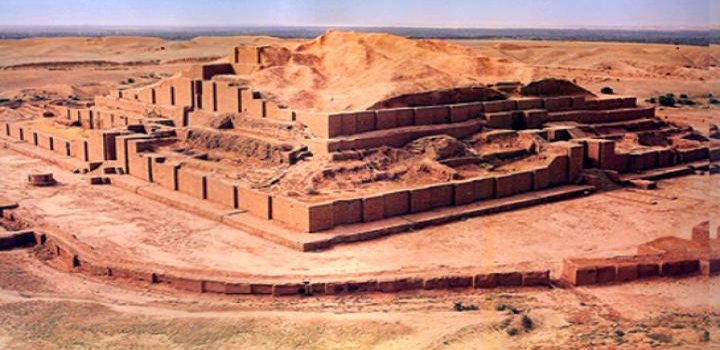
The ziggurat originally measured 105.2 m on each side and about 53 m in height, in five levels, and was crowned with a temple. Mud brick was the basic material of the whole ensemble. The ziggurat was given a facing of baked bricks, a number of which have cuneiform characters giving the names of deities in the Elamite and Akkadian languages. Though the ziggurat now stands only 24.75 m high, less than half its estimated original height, its state of preservation is unsurpassed. Studies of the ziggurat and the rest of the archaeological site of Tchogha Zanbil containing other temples, residences, tomb-palaces, and water reservoirs have made an important contribution to our knowledge about the architecture of this period of the Elamites, whose ancient culture persisted into the emerging Achaemenid (First Persian) Empire, which changed the face of the civilised world at that time.
Criterion (iii): The ruins of Susa and of Tchogha Zanbil are the sole testimonies to the architectural development of the middle Elamite period (1400-1100 BCE).
Criterion (iv): The ziggurat at Tchogha Zanbil remains to this day the best preserved monument of this type and the largest outside of Mesopotamia.
Integrity
Within the boundaries of the property are located all the elements and components necessary to express the Outstanding Universal Value of the property, including, among others, the concentric walls, the royal quarter, the temples, various dependencies, and the ziggurat. Almost none of the various architectural elements and spaces has been removed or suffered major damage. The integrity of the landscape and lifestyle of the indigenous communities has largely been protected due to being away from urban areas.
Identified threats to the integrity of the property include heavy rainfalls, which can have a damaging effect on exposed mud-brick structures; a change in the course of the river Ab-e Diz, which threatens the outer wall; sugar cane cultivation and processing, which have altered traditional land use and increased air and water pollution; and deforestation of the river valleys. Visitors were banned from climbing the ziggurat in 2002, and a lighting system has been installed and guards stationed at the site to protect it from illegal excavations.
Authenticity
The historical monuments of the archaeological site of Tchogha Zanbil are authentic in terms of their forms and design, materials and substance, and locations and setting. Several conservation measures have been undertaken since the original excavations of the site between 1946 and 1962, but they have not usually disturbed its historical authenticity.
Protection and management requirements
Tchogha Zanbil was registered in the national list of Iranian monuments as item no. 895 on 26 January 1970. Relevant national laws and regulations concerning the property include the National Heritage Protection Law (1930, updated 1998) and the 1980 Legal bill on preventing clandestine diggings and illegal excavations. The inscribed World Heritage property, which is owned by the Government of Iran, and its buffer zone are administered by the Iranian Cultural Heritage, Handicrafts and Tourism Organization (which is administered and funded by the Government of Iran). A Management Plan was prepared in 2003 and has since been implemented. Planning for tourism management, landscaping, and emergency evacuation for the property has been accomplished and implementation was in progress in 2013. A research centre has undertaken daily, monthly, and annual monitoring of the property since 1998. Financial resources for Tchogha Zanbil are provided through national budgets.
Conservation activities have been undertaken within a general framework, including development of scientific research programs; comprehensive conservation of the property and its natural-historical context; expansion of the conservation program to the surrounding environment; concentration on engaging the public and governmental organizations and agencies; and according special attention to programs for training and presentation (with the aim of developing cultural tourism) based on sustainable development. Objectives include research programs and promotion of a conservation management culture; scientific and comprehensive conservation of the property and surrounding area; and development of training and introductory programmes.
Sustaining the Outstanding Universal Value of the property over time will require creating a transparent and regular funding system, employing efficient and sustainable management systems, supporting continuous protection and presentation, enjoying the public support and giving life to the property, adopting a “minimum intervention” approach, and respecting the integrity and authenticity of the property and its surrounding environment. In addition, any outstanding recommendations of past expert missions to the property should be addressed.
[:de]
Die Ruinen der heiligen Stadt des Königreichs Elam,die von drei riesigen konzentrischen Mauern umgeben sind, befinden sich in Tschogha Zambil.Die Stadt wurde 1250 v.Chr. gegründet,und blieb unvollendet, nachdem sie von Assurbanipal überfallen worden war, wie die tausenden von unbenutzten Steinen auf der Baustelle zeigten.
Kurze Zusammensetzung
Tschogha Zambil(Dur-untash,die Stadt der Untash) liegt im alten Elam (heute Khuzestan eine Provinz im Südwesten Irans).Sie wurde vom elamitischen König Untash-Napirisha (1275-1240 v. Chr.) als religiöses Zentrum von Elam gegründet. Das Hauptelement dieses Komplexes ist eine riesige Zikkurat, die den elamitischen Gottheiten Inshushinak und Napirisha gewidmet ist. Es ist die größte Zikkurat außerhalb von Mesopotamien und das am besten erhaltene dieser Art von abgestuften Pyramiden-Denkmal. Die archäologische Stätte von Tschogha Zambil ist ein außergewöhnlicher Ausdruck der Kultur, des Glaubens und der rituellen Traditionen eines der ältesten indigenen Völker des Irans. Unser Wissen über die architektonische Entwicklung der mittleren elamischen Periode (1400-1100 v. Chr.) stammen aus den Ruinen von Tschogha Zambil und der Hauptstadt Susa 38 km nordwestlich des Tempels.
Die archäologische Stätte von Tschogha Zambil erstreckt sich über eine weite, trockene Hochebene mit Blick auf das fruchtbare Tal des Flusses Ab-e Diz und seine Wälder. Als “heilige Stadt” für die Residenz des Königs wurde sie nie vollendet . Nur wenige Priester lebten dort, bis sie etwa 640 v. Chr. Vom assyrischen König Assurbanipal zerstört wurde. Der Komplex wurde durch drei konzentrische Umfassungsmauern geschützt.Eine Außenmauer von etwa 4 km Umfang umfasste einen großen Komplex von Residenzen und das königliche Viertel, wo drei monumentale Paläste ausgegraben wurden(einer gilt als ein Grabpalast,der die Überreste des Untergrunds bedeckt). Backsteinstrukturen mit Bestattungen der königlichen Familie, eine zweite Mauer, die die Tempel schützt (Temenus), und die innerste Wand umschließt den Brennpunkt des Ensembles, die Zikkurat.
Die Zikkurat hatte ursprünglich 105,2 m auf jeder Seite und etwa 53 m Höhe in fünf Ebenen, und wurde mit einem Tempel gekrönt. Lehmziegel waren das Grundmaterial des gesamten Ensembles. Die Zikkurat erhielt eine Verkleidung aus gebrannten Ziegeln, von denen einige keilförmige Schriftzeichen, die die Namen von Gottheiten in den elamischen und akkadischen Sprachen enthalten. Obwohl die Zikkurat jetzt nur 24,75 m hoch ist( weniger als die Hälfte ihrer geschätzten ursprünglichen Höhe), ist ihr Erhaltungszustand unübertroffen. Untersuchungen der Zikkurat und der übrigen archäologischen Fundstätte von Tschogha Zambil mit anderen Tempeln, Residenzen, Grabpalästen und Wasserreservoiren haben einen wichtigen Beitrag zu unserem Wissen über die Architektur dieser Epoche der Elamites und das aufstrebende Achaemeniden Reich, das zu dieser Zeit das Gesicht der zivilisierten Welt veränderte,geleistet.
Kriterium (iii): Die Ruinen von Susa und Tschogha Zambil sind die einzigen Zeugnisse für die architektonische Entwicklung der mittleren elamischen Periode (1400-1100 v. Chr.).
Kriterium (iv): Die Zikkurat bei Tschogha Zambil ist bis heute das am besten erhaltene und größte Denkmal dieses Typs außerhalb von Mesopotamien.
Integrität
Innerhalb der Grenzen der Anlage befinden sich alle Elemente und Komponenten, die notwendig sind, um den außergewöhnlichen universellen Wert der Anlage einschließlich unter anderem der konzentrischen Wände, des königlichen Viertels, der Tempel,und der Zikkurat auszudrücken. Fast keines der verschiedenen architektonischen Elemente und Räume wurde entfernt oder schwer beschädigt. Die Integrität der Landschaft und des Lebensstils der indigenen Gemeinschaften wurde größtenteils dadurch geschützt, daß sie nicht in städtischen Gebieten leben.
Zu den identifizierten Bedrohungen für die Integrität des Grundstücks gehören starke Regenfälle, die sich auf freiliegende Lehmziegelstrukturen schädlich auswirken können,eine Veränderung im Verlauf des Flusses Ab-e Diz, der die Außenmauer bedroht, Zuckerrohranbau und -verarbeitung, die erhöhte Luft- und Wasserverschmutzung, und Abholzung der Flußtäler. Im Jahr 2002 wurde die Zikkurat zu besteigen verboten.Es wurde ein Beleuchtungssystem installiert und Wachen stationiert, um sie vor illegalen Ausgrabungen zu schützen.
Authentizität
Die historischen Denkmäler der archäologischen Stätte von Tschogha Zambil sind authentisch in Bezug auf ihre Formen und Design, Materialien und Substanz, und Orte und Umgebung. Seit den ursprünglichen Ausgrabungen des Geländes zwischen 1946 und 1962 wurden mehrere Erhaltungsmaßnahmen durchgeführt, die jedoch ihre historische Authentizität nicht gestört haben.
Schutz- und Managementanforderungen
Tschogha Zambil wurde in die nationale Liste der iranischen Monumente als Artikel Nr. 1 eingetragen. Die entsprechenden nationalen Gesetze und Vorschriften bezüglich des Grundstücks umfassen das Gesetz zum Schutz des nationalen Erbes (1930, aktualisiert 1998) und das Gesetzes von 1980 über die Verhinderung von illegalen Ausgrabungen. Die denkmalgeschützte Welterbestätte, die der iranischen Regierung gehört, werden von der iranischen Kultur-, Handwerks- und Tourismusorganisation verwaltet. Ein Managementplan wurde 2003 erstellt und seitdem umgesetzt. Die Planung für das Tourismusmanagement, die Landschaftsgestaltung und die Notfallevakuierung der Anlage wurde abgeschlossen ,und die Umsetzung wurde 2013 durchgeführt. Ein Forschungszentrum hat seit 1998 tägliche, monatliche und jährliche Überwachung der Anlage durchgeführt. Die finanziellen Mittel für Tschogha Zambil werden von nationalen Haushalten bereitgestellt .Naturschutzmaßnahmen wurden in einem allgemeinen Rahmen, einschließlich der Entwicklung von Forschungsprogrammen, umfassende Erhaltung der Anlage und ihres naturhistorischen Kontextes ,Erweiterung des Schutzprogramms auf die Umgebung,Konzentration auf die Einbeziehung der Öffentlichkeit und der staatlichen Organisationen und Agenturen durchgeführt. Zu den Zielen gehören Forschungsprogramme, die Förderung einer Kultur des Naturschutzmanagements,wissenschaftliche Erhaltung des Grundstücks und der Umgebung, und Entwicklung von Trainings- und Einführungsprogrammen.
Um den außergewöhnlichen universellen Wert der Immobilie im Laufe der Zeit aufrecht zu erhalten, muss ein transparentes und regelmäßiges Finanzierungssystem geschaffen werden, das effiziente und nachhaltige Managementsysteme verwendet, fortwährenden Schutz und Präsentation unterstützt, die öffentliche Unterstützung genießt und der Immobilie Leben einhaucht. Darüber hinaus sollten alle ausstehenden Empfehlungen früherer Expertenmissionen auf dem Grundstück behandelt werden.
[:fr][vc_row][vc_column][vc_column_text]
TCHOGHA ZANBIL
Les ruines de la ville sainte du royaume d’Elam, entourées de trois énormes murs concentriques, se trouvent à Tchogha Zanbil. Fondée c. 1250 av. J.-C., la ville reste inachevée après l’invasion d’Asurbanipal, comme le montrent les milliers de briques inutilisées laissées sur le site.
Tchogha Zanbil (Dur-Untash, ou la ville d’Unash, en élamite), située dans l’ancienne Élam (aujourd’hui province du Khuzestan, sud-ouest de l’Iran), a été fondée par le roi élamite, Untash-Napirisha (1275-1240 av. J.-C.), en tant que centre religieux d’Elam. L’élément principal de ce complexe est une énorme ziggourat dédiée aux divinités élamites Inshushinak et Napirisha. C’est la plus grande ziggourat en dehors de la Mésopotamie et la mieux conservée de ce type de monument pyramidal en gradins. Le site archéologique de Tchogha Zanbil est une expression exceptionnelle de la culture, des croyances et des traditions rituelles de l’un des plus anciens peuples autochtones d’Iran. Notre connaissance du développement architectural du milieu de la période élamite (1400-1100 av. J.-C.) provient des ruines de Tchogha Zanbil et de la capitale, Susa, située à 38 km au nord-ouest du temple.
Le site archéologique de Tchogha Zanbil couvre un vaste plateau aride surplombant la riche vallée de la rivière Ab-e Diz et ses forêts. Cité sacrée de la résidence du roi, elle n’a jamais été achevée et seuls quelques prêtres y ont vécu jusqu’à sa destruction par le roi assyrien Assurbanipal vers 640 av. Le complexe était protégé par trois murs d’enceinte concentriques: un mur extérieur d’environ 4 km de circonférence renfermant un vaste ensemble de résidences et le quartier royal, où trois palais monumentaux ont été découverts (l’un est considéré comme un palais des tombes qui recouvre les restes souterrains structures en briques cuites contenant les sépultures de la famille royale); un second mur protégeant les temples (Temenus); et le mur le plus profond entourant le point focal de l’ensemble, la ziggourat.
La ziggourat mesurait à l’origine 105,2 m de chaque côté et environ 53 m de haut, sur cinq niveaux, et était couronnée d’un temple. La brique de boue était le matériau de base de l’ensemble. La ziggourat a reçu un revêtement de briques cuites, dont un certain nombre ont des caractères cunéiformes donnant les noms de divinités en langues élamite et akkadienne. Bien que la ziggourat n’ait plus que 24,75 m de hauteur, soit moins de la moitié de sa hauteur initiale estimée, son état de conservation est inégalé. Les études de la ziggourat et du reste du site archéologique de Tchogha Zanbil contenant d’autres temples, résidences, palais des tombes et réservoirs d’eau ont grandement contribué à la connaissance que nous avons de l’architecture de cette période des Élamites, dont la culture ancienne a perduré l’émergence d’un empire achéménide (premier perse), qui changea la face du monde civilisé à cette époque.
Critère (i): Les ruines de Suse et de Tchogha Zanbil sont les seuls témoignages du développement architectural de la période du mi-élamite (1400-1100 av. J.-C.).
Critère (ii): La ziggourat de Tchogha Zanbil reste à ce jour le monument le mieux conservé de ce type et le plus grand en dehors de la Mésopotamie.
Intégrité
Tous les éléments et composants nécessaires à l’expression de la valeur universelle exceptionnelle du bien sont localisés à l’intérieur des limites du bien, notamment les murs concentriques, le quartier royal, les temples, diverses dépendances et la ziggurat. Presque aucun des divers éléments et espaces architecturaux n’a été enlevé ou a subi des dommages importants. L’intégrité du paysage et du mode de vie des communautés autochtones a été en grande partie protégée en raison de son éloignement des zones urbaines.
Les menaces identifiées pour l’intégrité du bien incluent les fortes précipitations, qui peuvent avoir un effet néfaste sur les structures en briques crues exposées; un changement dans le cours de la rivière Ab-e Diz, qui menace le mur extérieur; la culture et la transformation de la canne à sucre, qui ont modifié l’utilisation traditionnelle des terres et accru la pollution de l’air et de l’eau; et déforestation des vallées fluviales. Les visiteurs ont été interdits d’escalader la ziggurat en 2002 et un système d’éclairage a été installé et des gardes sont postés sur le site pour le protéger des fouilles illégales.
Authenticité
Les monuments historiques du site archéologique de Tchogha Zanbil sont authentiques par leurs formes et leur conception, leurs matériaux et leur substance, ainsi que par leur emplacement et leur cadre. Plusieurs mesures de conservation ont été entreprises depuis les fouilles initiales du site entre 1946 et 1962, mais elles n’ont généralement pas perturbé son authenticité historique.
Exigences de protection et de gestion
Tchogha Zanbil a été inscrit sur la liste nationale des monuments iraniens sous le numéro d’article. 895, le 26 janvier 1970. Les lois et règlements nationaux pertinents concernant le bien comprennent la loi sur la protection du patrimoine national (1930, mise à jour en 1998) et le projet de loi de 1980 sur la prévention des fouilles clandestines et des fouilles illégales. Le bien inscrit au patrimoine mondial, qui appartient au gouvernement iranien, et sa zone tampon sont administrés par l’Organisation iranienne pour le patrimoine culturel, l’artisanat et le tourisme (qui est administrée et financée par le gouvernement iranien). Un plan de gestion a été préparé en 2003 et a depuis été mis en œuvre. La planification de la gestion du tourisme, de l’aménagement paysager et de l’évacuation d’urgence du bien a été effectuée et sa mise en œuvre était en cours en 2013. Un centre de recherche effectue un suivi quotidien, mensuel et annuel du bien depuis 1998. Les ressources financières pour Tchogha Zanbil sont fournies par budgets nationaux.
Les activités de conservation ont été entreprises dans un cadre général, y compris l’élaboration de programmes de recherche scientifique; conservation intégrale du bien et de son contexte naturel et historique; extension du programme de conservation au milieu environnant; se concentrer sur la participation du public et des organisations et agences gouvernementales; et accorder une attention particulière aux programmes de formation et de présentation (visant à développer le tourisme culturel) basés sur le développement durable. Les objectifs comprennent des programmes de recherche et la promotion d’une culture de gestion de la conservation; conservation scientifique et globale du bien et de ses environs; et développement de programmes de formation et d’initiation.
La préservation de la valeur universelle exceptionnelle du bien à long terme nécessitera la création d’un système de financement transparent et régulier, utilisant des systèmes de gestion efficaces et durables, soutenant une protection et une présentation continues, bénéficiant de l’appui du public et donnant vie au bien, en adoptant une «intervention minimale». respectant l’intégrité et l’authenticité du bien et de son environnement. En outre, toutes les recommandations en suspens émanant de missions d’experts antérieures sur le bien devraient être examinées.
[/vc_column_text][/vc_column][/vc_row][:]